


What is Foundayo and who is it for?
Foundayo (orforglipron) is a prescription pill made by Eli Lilly. Used with a reduced-calorie diet and more physical activity, it is FDA-approved to reduce excess body weight and keep it off long term in adults with obesity, or adults with overweight and at least one weight-related condition.
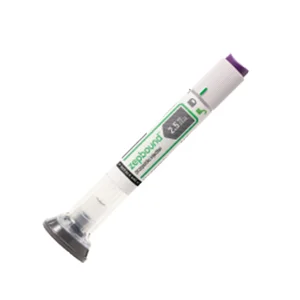
Foundayo is a GLP-1 receptor agonist, like Wegovy and Zepbound. Unlike them, it is a small-molecule medicine rather than a peptide, and its label lets you take it with or without food.
It is not used together with another GLP-1 medicine.

What results looked like in the main trial
In ATTAIN-1, a 72-week trial of 3,127 adults with obesity who did not have diabetes, people on the highest dose lost an average of about 11% of their body weight. People taking a placebo lost about 2%.
More than half of the people on the highest dose (54.6%) lost 10% or more of their body weight, compared with 12.9% on placebo. The most common side effects were stomach-related and mostly mild to moderate.
Your results will be your own. A trial average is not a promise, and what you build alongside the medicine, protein, strength work and sleep, helps decide whether the weight stays off.
Source: Wharton S and colleagues, New England Journal of Medicine, 2025 (ATTAIN-1), and the Foundayo FDA label.

How Foundayo works
Foundayo acts on the GLP-1 receptor, the same pathway a gut hormone uses after you eat, to work on hunger and fullness.
Quiets hunger: smaller portions feel like enough.
Keeps you full longer: food leaves your stomach more slowly.
Fits your routine: one tablet a day, with or without food.
Taking it safely
Take one tablet once a day, with or without food. Swallow it whole; do not split, crush or chew it, and take no more than one tablet a day. If you miss a dose, take it as soon as you can, and do not double up. Your physician raises the dose step by step.
Most side effects are stomach-related and ease as your body adjusts. Foundayo is not right for everyone, so your physician goes through your health history with you first. The details from the FDA label are below.
Dosing steps


- The label starts at 0.8 mg once a day for at least 30 days.
- Then 2.5 mg for at least 30 days, then 5.5 mg.
- After at least 30 days on a dose, your physician may raise it to 9 mg, 14.5 mg or 17.2 mg, depending on how you respond and feel.
- The highest dose is 17.2 mg a day. If you miss 7 or more doses in a row, your physician restarts you at a lower dose.
Common side effects
- The most common side effects are nausea, constipation, diarrhea, vomiting, indigestion and stomach pain. Headache, bloating, tiredness, burping, reflux, gas and hair loss can also happen.
- They are most likely when you start or raise the dose, and they often ease as your body adjusts.
- Your care team can help with what to eat and portion size while your body gets used to it.
Boxed warning
- In studies in rodents, orforglipron caused thyroid C-cell tumors. It is not known whether it causes these tumors, including medullary thyroid cancer, in people.
- Tell your physician right away about a lump or swelling in your neck, trouble swallowing, shortness of breath or hoarseness that does not go away.
Who should not take it
- Foundayo is not for you if you or a family member has had medullary thyroid cancer (MTC), or if you have multiple endocrine neoplasia syndrome type 2 (MEN 2).
- It is also not for anyone with a known serious allergy to orforglipron or to anything in the tablet.
- If you become pregnant, the label says to stop Foundayo. Tell your physician if you are planning a pregnancy.
Less common but serious
- Problems listed on the label include inflammation of the pancreas, severe stomach problems, kidney problems from losing fluid, low blood sugar, serious allergic reactions, gallbladder problems and eye changes in people with type 2 diabetes.
- If you take birth control pills, the label advises switching to a non-oral method, or adding a barrier method, for 30 days after you start.
- If you take simvastatin, the label limits it to 20 mg a day. Foundayo can also change how other pills are absorbed, so bring a list of everything you take.
- Tell your care team before any surgery or sedation: GLP-1 medicines can raise the risk of food getting into the lungs during anesthesia.
What Foundayo costs
With insurance: coverage depends on your plan. We check it before your first visit, submit the prior authorization for you and handle appeals if needed. Read how to check your GLP-1 coverage.
Copay help: we help you use the maker's copay assistance if you have commercial insurance.
Paying cash: as of November 2026, Foundayo on LillyDirect is $149 a month for 0.8 mg and 2.5 mg, $199 for 5.5 mg, $299 for 9 mg, and $299 for 14.5 mg and 17.2 mg with a refill within 45 days. The 2.5 mg and 5.5 mg prices are temporary through December 31, 2026, and regular prices run $149 to $349 by dose. You pay the maker's pharmacy, not Aayu Well, and the maker may change its prices. You can compare cash prices.
Medicare: we bill Medicare for visits, and we prescribe through the Medicare GLP-1 Bridge for people who qualify: $50 a month, July 1, 2026 to December 31, 2027. Read how the Medicare GLP-1 Bridge works.
Your visits: Most major insurance accepted, plus convenient cash pay options. Visits are billed to your insurance, and you pay any copay.
How Aayu Well helps
Insurance checked first: we look at your coverage before your first visit, so you know your options before you decide.
Prior authorization handled: our team prepares and submits it for brand-name medicine as a concierge service, and handles appeals if your plan says no.
Copay help: if you have commercial insurance, we help you use the maker's copay assistance.
A physician who knows you: Darshan Patel, MD, an obesity medicine physician, sees you by video or in person in Deer Park, Illinois, and adjusts your dose with you.
A registered dietitian: help with meals that fit your new appetite, protein on a GLP-1 and keeping your muscle.
A care team between visits: message us about side effects, doses or refills, and hear back from people who know your plan.
A plan for the long run: Do I have to take a GLP-1 forever?
We see patients in California, Georgia, Illinois, Indiana, Michigan, Ohio and Wisconsin.